
Reprinted from The Jan/Feb 2026 issue of Casting Source
By Jenel Stelton Holtmeier
Willman Industries’ playbook takes a 40-year view on strategic investments—but a current expansion shows they’re nimble enough to respond to near-term customer needs.
Willman Industries doesn’t operate like a lot of other companies. The AFS Corporate Member doesn’t think in quarters; it’s rooted in long-term thinking, constant investment, and a belief that quality is the only competitive advantage that stands the test of time.
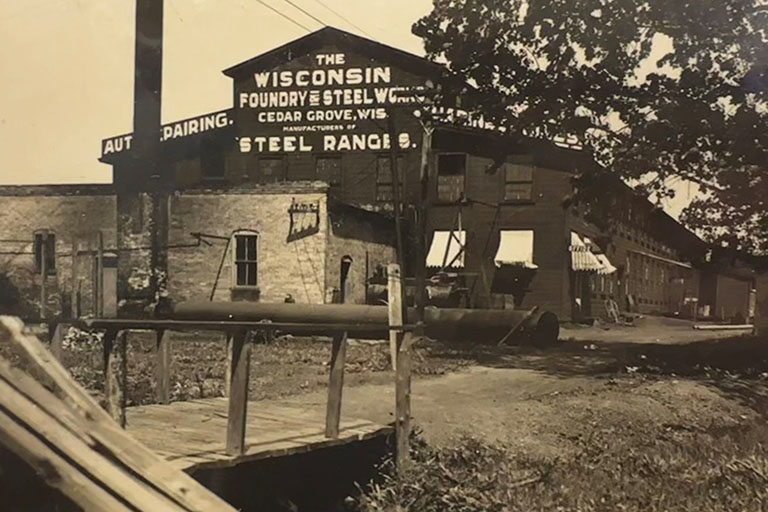
The iron foundry, based in Cedar Grove, Wisconsin—about 40 miles north of Milwaukee—was founded in 1899. The Willman family took over the business in 1987 and has been focused on building it with the future in mind. Today, the 250,000-sq.-ft. plant produces gray and ductile iron castings.
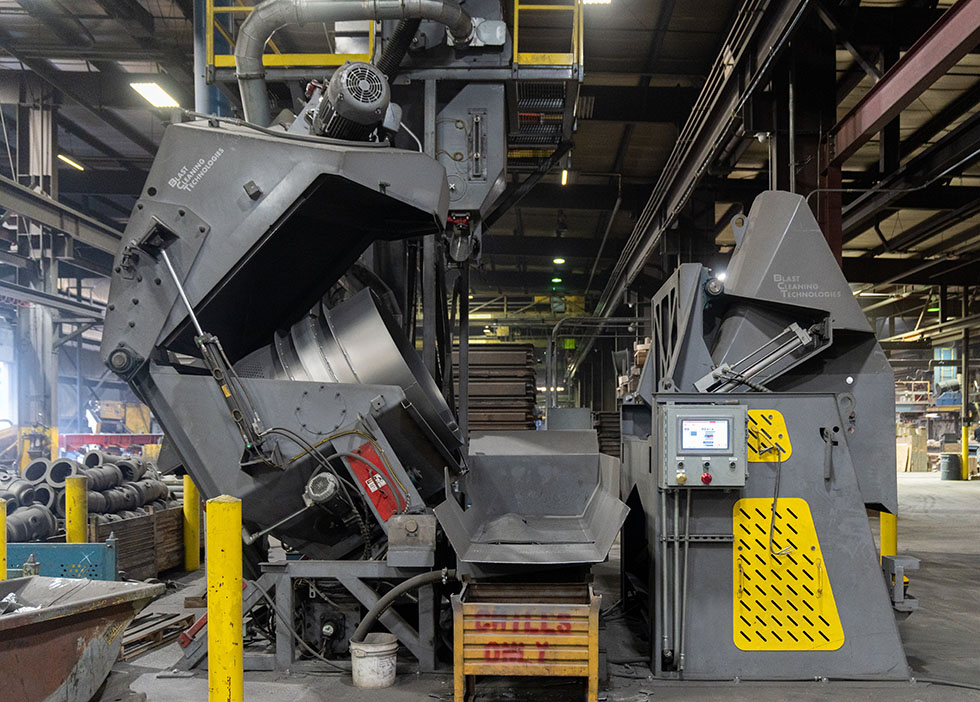
Its success rests in part on the niche it carved out for itself: work that other foundries often avoid. This includes highly cored ductile iron, heavy-section castings, complex geometries, and jobs that demand tight metallurgical control. These castings are used in heavy equipment, defense applications, and other products where failure is not an option. Behind the technical capability, however, is a story that resonates with many in the industry: generational leadership that treats employees like extended family members. Add to that its focus on modernization, and Willman is prepared to succeed in a market that is wrestling with workforce shortages, regulatory pressures, and global competition.
A Legacy Forged in (Grid)Iron
Clay Willman, the first of the family to own the foundry, graduated from Michigan Tech with a degree in metallurgy, but a career in metal casting wasn’t front of mind for him. He was a star quarterback for the college and hoped to take that experience to the professional level. But when he lost out to eventual Hall-of-Famer Fran Tarkington for a position with the Minnesota Vikings, he moved to Wisconsin and started working for Brillion Iron before moving west, taking a job at Lincoln Foundry. Ironically, the NFL wasn’t done with Clay. Eventually, the Boston (now New England) Patriots and a Canadian team called on him, asking him to try out. Clay said, “No thanks.” He already had a job.
“It was a different world back then,” said Clay’s son, Todd, who now serves as president of Willman Industries. “I don’t think anyone today would turn down [the NFL], but it turned out well.”
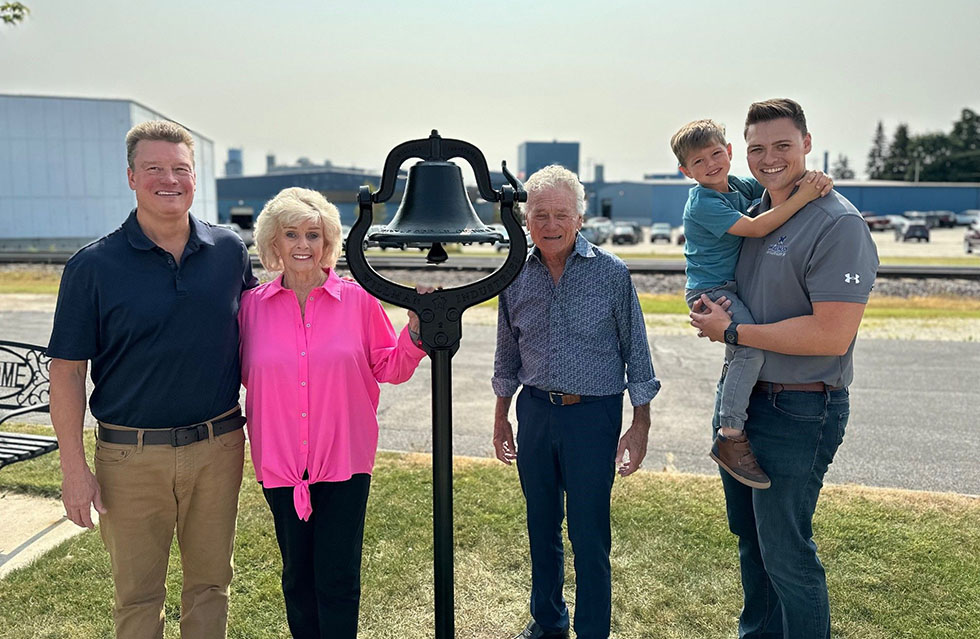
Clay’s career in metallurgy took him from California to Pennsylvania and Indiana before he settled in at Medalist Industries, the conglomerate that owned the Cedar Grove foundry. He ultimately ran 13 companies for the group and, in 1987, he exercised his option to buy the Cedar Grove plant outright. “It’s been Willman Industries ever since,” Todd said.
Family Ties
Todd joined Willman Industries after college, working in production control and sales for about 10 years.
“I then left to go out on my own for about 10 years, but I did come back intermittently just to keep my hands in the business in case something would happen,” he said. At that point, something did happen: The then-president suddenly fell ill and passed away, so Todd came back to lead the company.
He also brought with him the next generation. His son, Reggie, grew up around the plant, painting and doing layout work before he was old enough to work in the foundry itself. He then rotated through several roles, from grinding castings to working in the sand and metal testing lab. After earning a degree in supply chain operations management and marketing from the University of Wisconsin—Milwaukee, he joined the company full time in 2019 as part of the sales team.
“I don’t think there’s a more interesting job in the world than working in a foundry. Every day you’re learning about a new customer with a new product. You’re finding a new way to make a casting that’s never been made before. It never gets boring.”
Reggie Willman
Ongoing Investments
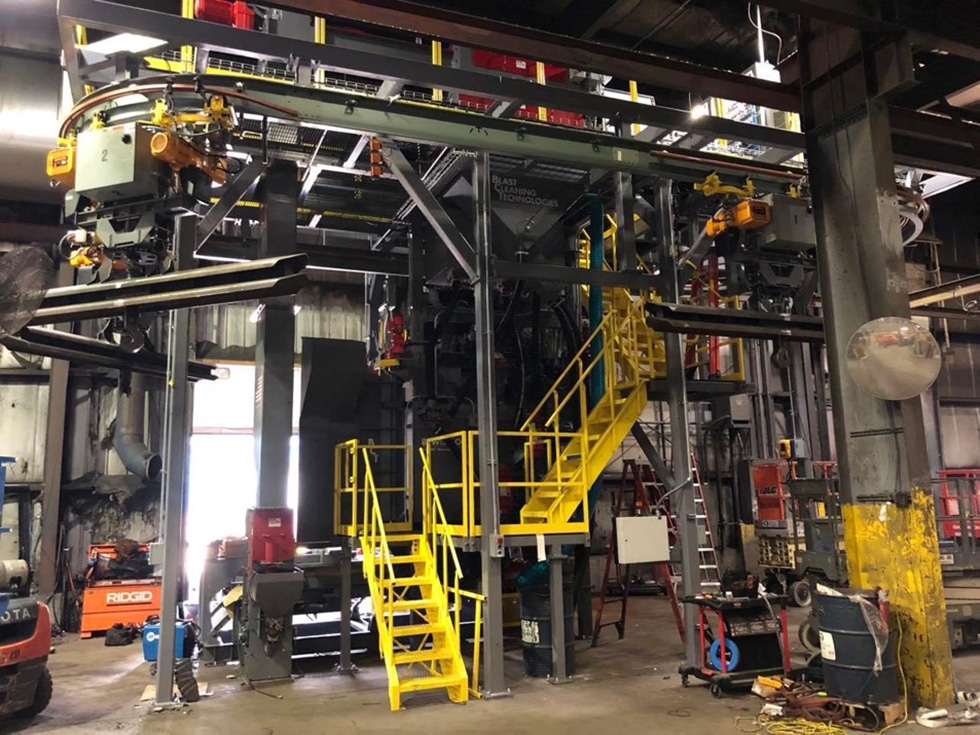
Since becoming a family-owned business, Willman Industries has invested aggressively in modernization. Over the past decade alone, the company has put roughly $16 million into equipment, infrastructure, and expansion.
“We do not chase the next quarter’s profits,” Todd said. “We want to be profitable next quarter, but all our decisions are based on what’s best for the next 40 years.”
The modernization efforts can be seen throughout the foundry, including:
- CNC machining capability for in-house pattern work.
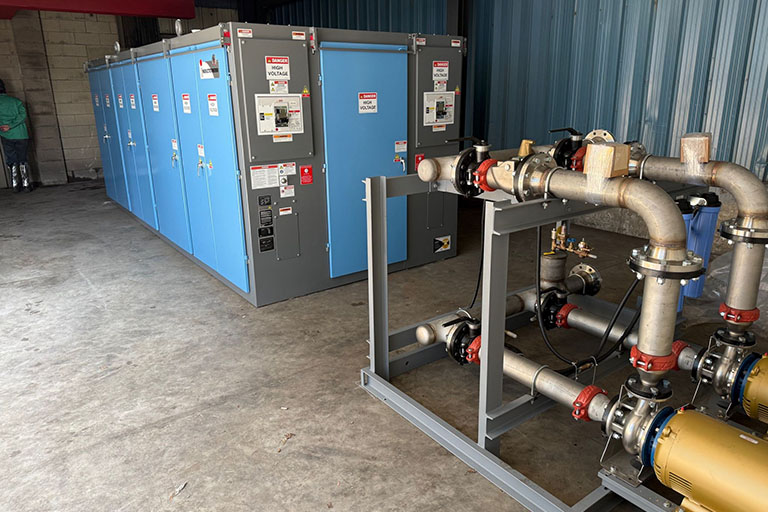
- Three 2,200 KW furnace power supplies to allow for expanded operational capacity.
- New scrubbers, collectors, and sand conveyors.
- Multiple overhead cranes, including a 25-ton unit.
But one of Willman’s most forward-thinking upgrades started nearly 20 years ago, when the company turned its focus to improving the air quality within its own walls.
Harold Hunter, vice president of sales and marketing, recalled the early days of those efforts when he was part of the finishing department. “We started developing new bench grind booths, and we went through a dozen iterations,” he said. “We worked with OSHA and the Wisconsin Department of Natural Resources to do air quality testing, and we finally came up with a booth that gave optimum results.”
When OSHA changed the standards around respirable crystalline silica in 2016, Willman was already well on its way to becoming the gold standard for the industry. Its first six grinding booth upgrades were completed by around 2010, and the foundry now has a total of 13 “clean” grinding booths.
OSHA also approached the company to host tours to demonstrate the best-in-class silica control systems.
Todd also sees another long-term benefit:
“Most people in this industry hate the silica regulations. I look at it differently. It’s going to put more of our competition out of business, but we’re going to be fine.”
Todd Willman
More Expansion on the Horizon
Continuous investment remains a theme for Willman Industries, with the next major project already underway: a $3 million expansion of its large nobake facility in response to five-year forecasts provided by one of its key customers.
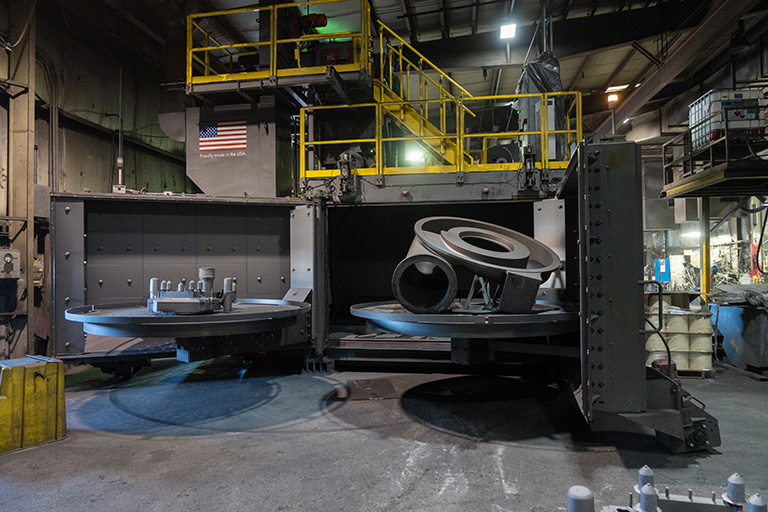
The current project includes building extensions, land acquisition, expanded cleaning room infrastructure, and increased capacity for grinding large castings. Normally, a project like this would require a lot of forethought and planning, even at Willman, where the future is always top of mind. But this project was a little different.
“Our customer told us they were going to be busy for the next five to seven years,” Todd said. “We trust them, so we started planning within a month of receiving that information.”
The expansion is still in the early stages, but it’s seen as a critical step in keeping with where the industry is headed.
Longer-term plans include replacing or adding another molding line and constructing a new office building. The company owns an additional 16-acre parcel on the other side of the street that is currently farmland, but it’s part of the long game.
“We may not touch it for 30 years, but we have it,” Todd said. “That’s part of the 40-year plan.”
Future uses could include a new cleaning room, a paint shop, or other value-added operations to better meet customer needs.
Quality as a Competitive Weapon
For all the investment in equipment and infrastructure, Willman’s most powerful differentiator remains quality.
The company’s scrap rate—internal scrap plus customer returns—runs below 4.5%. In a jobbing foundry such as theirs, that number is almost unheard of.
“People in the industry don’t believe us when we tell them,” Todd said.
The only higher priority for the company is safety. Everything else is a distant third.
This focus has helped Willman weather decades of foreign competition. Todd remembered hearing about unfair competition from Japan when he was a kid. Today, the conversation centers around China, India, and Mexico.
“We don’t control that,” he said. “All we can do is focus on what we do best. If you need a casting where quality doesn’t matter, you’re probably not buying it from us.”
Tariffs have brought some work back onshore, but Willman’s strategy predates any policy shift. “The good guys will win in the end,” Todd said, echoing his father’s long-held belief.
Balancing Experience and Youth
One of the most striking aspects of Willman Industries is its workforce. The company has employees in their 70s who continue to work by choice. Clay Willman, now 87, still comes in regularly.
“We want people to work as long as they want to work here,” Todd said. “We love that experience.”
At the same time, the company has intentionally built a strong cohort of younger engineers and problem solvers, folks who were hired not because the company needed them immediately, but because it needs them for the next 30 to 40 years.
“We wanted people who would be around for decades to come,” Todd said. “Thankfully, we’ve found them.”
Reggie sits right at the intersection of these generations. At 29, he’s helping shape the foundry’s future while learning from those who built its past.
He also has some solid advice for other young people considering a career in metalcasting. “Don’t be afraid to get dirty,” he said. “Learning hands on is the best way to understand how the product is made.”
Reggie also highlighted the critical role foundries like Willman play in the U.S.: “People say it’s hot, loud, dirty, or that everything is going offshore. But it’s important to maintain a U.S. foundry industry. Especially for defense customers. [America] wants that security here.”
A Community Anchor
Willman Industries is deeply rooted in the small Wisconsin town where it is both an economic anchor and a multi-generational employer. The company supports local initiatives, hires local families, and maintains the small-town culture that defines its workforce. Their location, just off Interstate 43, is also very advantageous, giving the company access to major transportation routes throughout the Midwest and beyond.
Even as it enters the next chapter, Willman Industries remains committed to the principles that have guided it since Clay Willman first took ownership nearly 40 years ago: Invest early, invest often, and invest for the long term. And with three generations already shaping the company’s trajectory, the Willman family’s long-term vision seems well on its way to becoming a century-long legacy.